I travel a lot. Back and forth between San Francisco, London and our markets in Africa and now in Asia. And lately, one contrast in particular has been keeping me up at night.
In Silicon Valley, every conversation turns to AI: the opportunity, the acceleration, the existential stakes. Earlier this year, Dario Amodei, CEO of Anthropic, predicted that within two years, we will have what he calls "a country of geniuses in a datacenter" - AI models smarter than a Nobel Prize winner across biology, engineering, mathematics, and more, running at scale, around the clock. AI capability is already growing on a logarithmic scale. But that growth is not evenly distributed - the further you get from the epicenter, the slower the awareness and adoption, and the slower the benefits diffuse.
What I hear about instead, in the WhatsApp chats and boardrooms of Lagos, Johannesburg, and Manila, is cyber security and fraud. In early 2026, INTERPOL's Operation Red Card swept across 16 African nations, resulting in 651 arrests and uncovering scams linked to over $45 million in losses. INTERPOL has since warned that AI-enhanced fraud is now 4.5 times more profitable than traditional methods, and that agentic AI can autonomously execute complete fraud campaigns from start to finish. The industrialization of fraud is no longer a forecast. It is reality. And it is arriving in our markets faster than the benefits of AI are.
My colleague Malicha recently attended the ID4Africa Annual General Meeting in Abidjan and found that AI and its impact on identity fraud dominated the agenda. The industry knows what is coming.
"The future of fraud is reaching Lagos and Manila long before the future of abundance."
Fraudsters are early adopters, unconstrained by enterprise procurement cycles or regulatory approval. The companies that can answer the question - "is this a real, unique human being?" - have never mattered more.
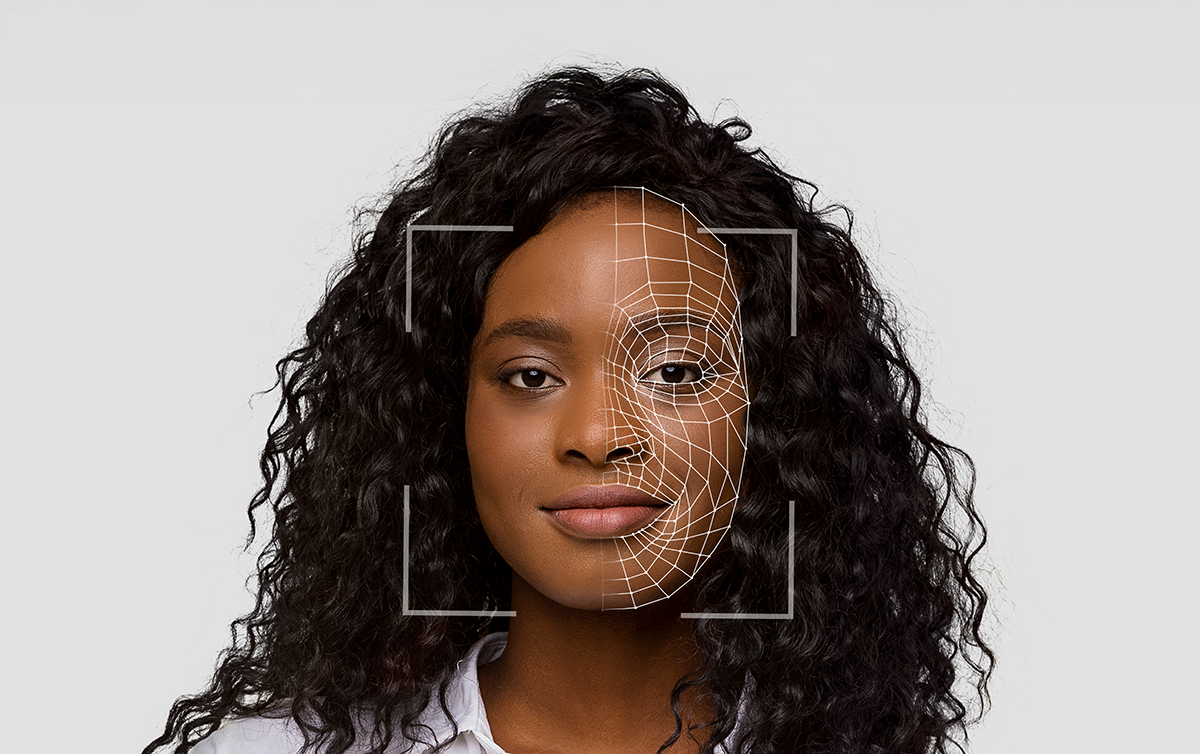
Smile ID is one of them. For nearly a decade, we have been verifying identities, evolving with the times and processing over 450 million identity verifications to date, now more than 10 million every month. Much of our work involves biometrics: liveness detection, facial comparison, deepfake detection, and device intelligence, because the nature of fraud has forced the industry to go deeper. We are, by volume, the largest identity verification provider on the African continent.
But we are no longer only focused on Africa. We are expanding into Asia and other markets where hundreds of millions of people are adopting mobile financial services before they ever get a traditional bank account — where proving your identity can mean access to a loan, a job, a ride home, or a better life. Last week, we wrote about how the Philippines, a market dominated by mobile financial services, has mandated that SMS OTPs be replaced by biometrics and fraud signals. We expect other markets to follow because the rules governing identity were written before the machines arrived. And the most important rule to rewrite is this: identity is not a compliance exercise.
Smile ID is not a KYC company.
"KYC", Know Your Customer, is a compliance checkbox. A form fill. A gate you clear once when you open an account.
What we do lives on both sides of that gate. We verify identity at onboarding, but we also authenticate identity continuously, confirming, at the moment of a transaction, a login, or a high-value action, that the person behind that action is who they claim to be, and is in fact a human being.
We are in the business of keeping the Internet human.
And increasingly, identity is inseparable from the question of humanity itself.
Sound far-fetched? In 2019, we were catching hidden cameras. Today we're blocking AI face swaps, flagging synthetic identities, and alerting banks to poisoned national databases. The threat evolves fastest in the markets we serve.
When our team gathered in Rwanda for an offsite several years ago, we reaffirmed an important company value: We Protect People. At the time, we assumed it to mean protecting people's money and privacy. In the post-AI era, it means protecting people from machines — and protecting their right to prove, at every moment when something of value changes hands, that they are in fact a human and not a bot.
If the world of abundance that Silicon Valley is building is around the corner, and my investors and I believe it is, then the rails that protect its distribution will be the most important infrastructure of the next decade for emerging markets. Not just "did this person pass a compliance check?" but "is this a real person, are they who they claim to be, and did they actually approve this action?"
That is the central problem of the Post-AI economy. And it is the problem we have spent a decade building toward.
When this company was founded, I chose three words as our north star: Seek the Truth. Every verification we process, every fraud signal we catch, every bot we block brings us closer to that truth — and makes the network stronger for everyone connected to it. The stakes have never been higher. But the mission has never been clearer.
Together, let's Seek the Truth.