Stay compliant and onboard customers faster in Morocco

With Smile ID, you can quickly verify identities and stay compliant with digital KYC and data regulations in Morocco.

Country overview

Morocco is a member of the Financial Action Task Force (FAFT) and the Middle East and North Africa Financial Action Task Force (MENAFATF). Businesses looking to digitally onboard and verify customers in Morocco are expected to adhere to local and international KYC/AML regulations.

Regulatory Overview

KYC/AML regulations

AML/KYC regulations in Morocco are enforced by a number of regulators including the
- Bank Al-Maghrib,
- Unité de Traitement du Renseignement Financier (UTRF)


The primary legislation governing KYC/AML  in Morocco is the Law relating to the against terrorism and the suppression of money laundering.

Data protection regulations

The Commission Nationale de Protection des Données Personnelle (CNDP) enforces Morocco’s data protection laws which are encoded in Law No. 09-08 on the Protection of Individuals with Regard to the Processing of Personal Data.

Institutions are required to obtain users’ consent before processing and transferring personal data. Users are also entitled to the erasure of their personal data upon request.

Accurately verify users in Morocco

Stay compliant, prevent fraud and streamline your user verification process for customers across Africa with Smile ID. Verify users with confidence with:

General - The most extensive ID coverage on the continent

General - A solution that is compatible with any device

General - 99.8% recognition accuracy for faces of all skin tones

Documents we verify in Morocco

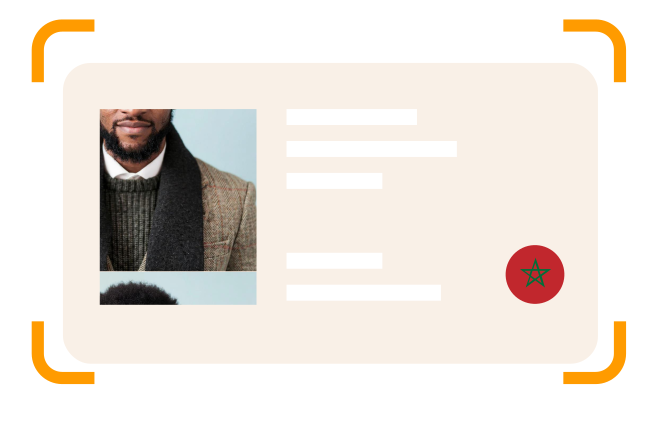
Morocco National Identity Card
The Morrocan Ministry of Interior issues national identity cards to citizens who are 18 years or older. This is the most widely accepted KYC document in the country
Morocco Passport
Passports issued by the Morrocan Ministry of Foreign Affairs and International Cooperation are acceptable KYC documents for onboarding users.
Morocco Driver’s License
Driver Licenses issued by the Ministry of Equipment, Transport, Logistics, and Water can be used to verify the identity of the holder.
Verify Moroccans using ID documents

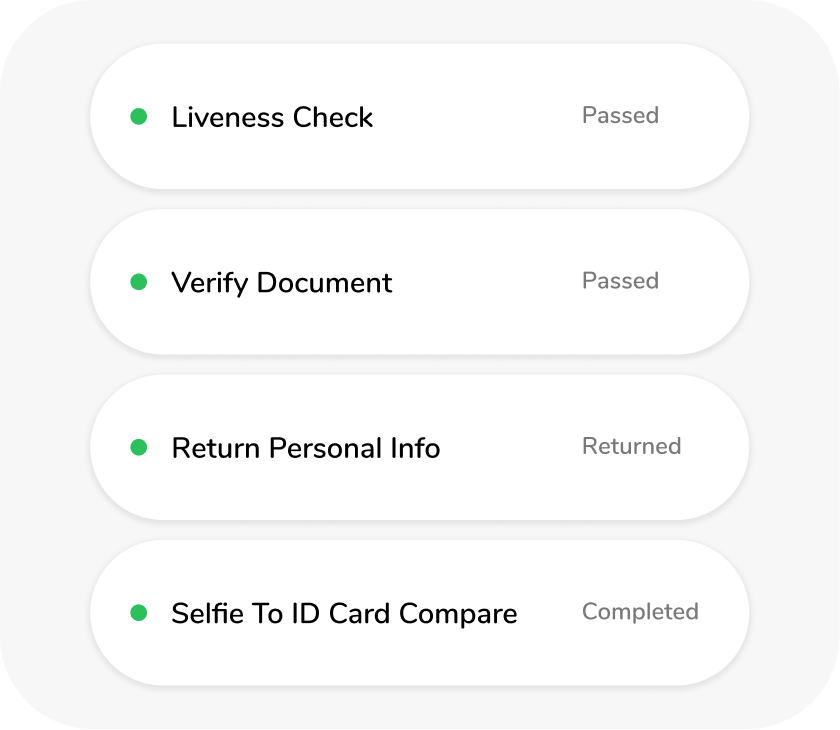
Verifying users with ID documents and biometric face matching is one of the most reliable ways to determine a user's true identity. Our ID document verification solution checks that an ID document is authentic, accurately transcribes the text on the document and compares a user-submitted selfie to the document image.
Schedule a demo

Scan your document

Our image capture tools guide users to take clear photos even with older devices.

Smile for a selfie

Ensure the real user is behind the camera with a smile to test for liveness.

Get real-time results

In a few seconds, you will confirm the document is authentic and belongs to the user behind the camera.

Comprehensive Identity verification
(KYC/AML) solution in one place
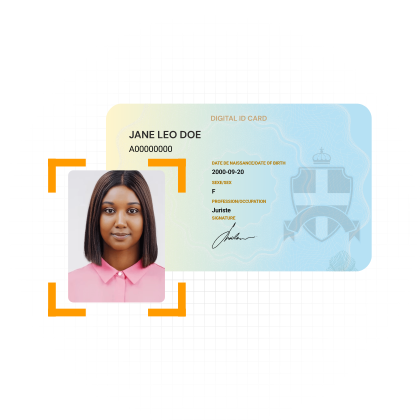
Choose the best method to verify and onboard your customers efficiently.
Document Verification: Verify over 8500 documents across 220 countries globally, including Angola, with a 96% OCR accuracy.

Enhance your security with advanced authentication solutions.
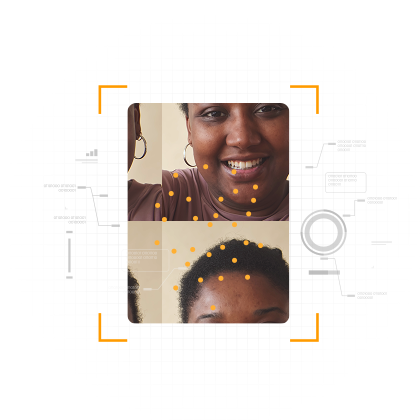
Smartselfie Authentication: Protect your system with our AI-powered SmartSelfie Authentication solution, boasting a 99.8% accuracy rate for African faces. Integrate this into your multi-factor authentication system for accurate identity verification during access attempts.

Access all the tools you need to stop fraud in one place.

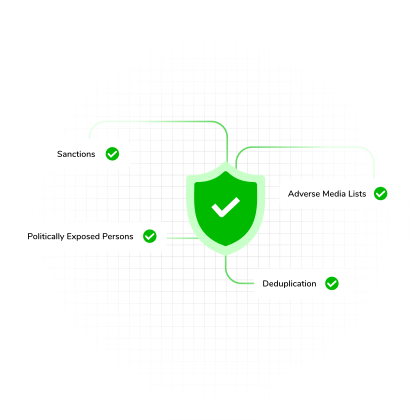
AML Check: Run AML checks on users against against 1100+ global and African sanctions, PEP, and adverse media lists.

Duplicate Account Prevention: Prevent duplicate account fraud with real-time scanning of previously registered faces during onboarding using our Smile Secure product.
Integration options

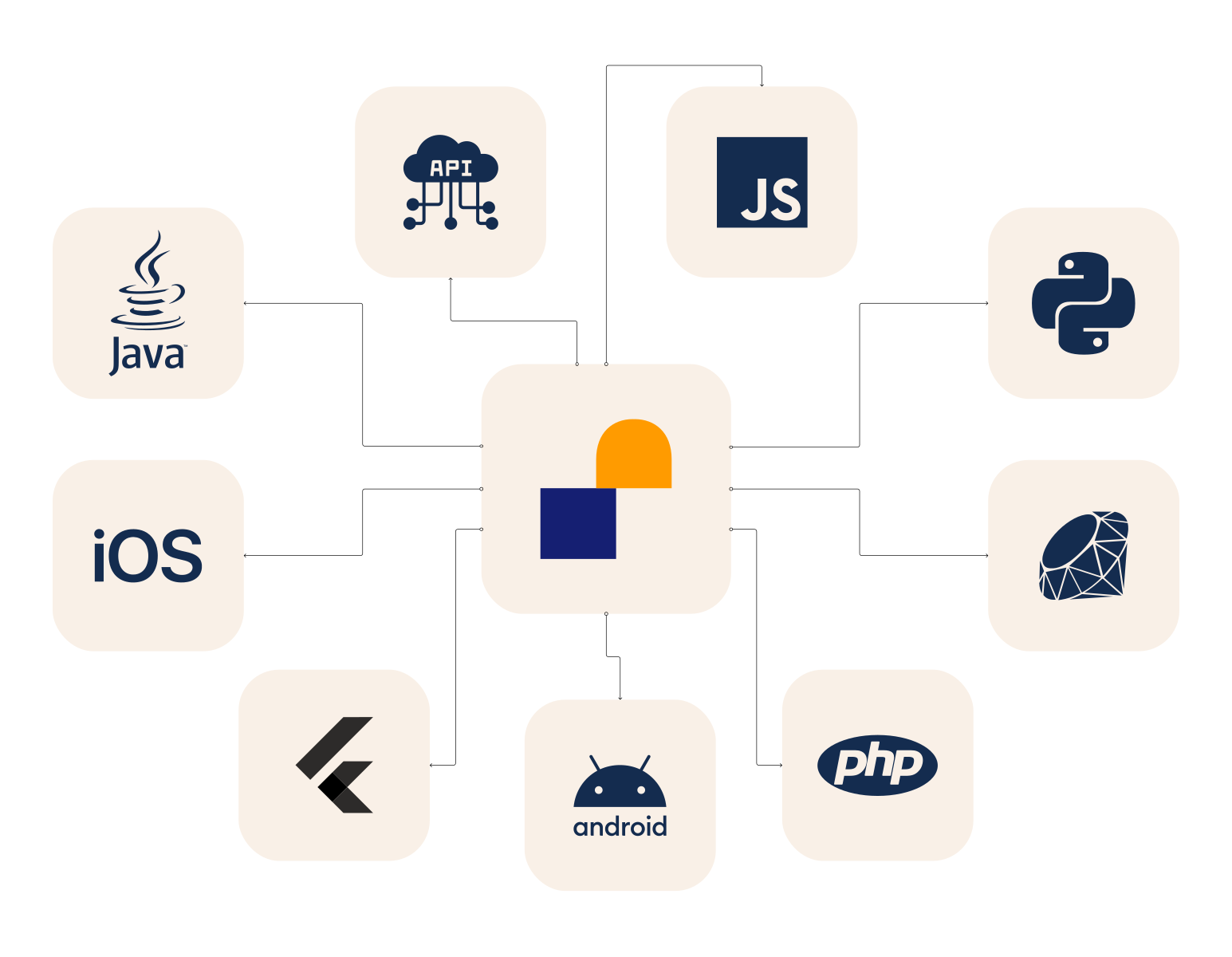
Seamlessly integrate our solutions via API or no-code option with your existing infrastructure to automate compliance.

Smile Links: A flexible, no-code option for creating customised user verification flows

SDKs: Available for iOS, Android, Hosted Web, Flutter, and React Native

Server-to-server libraries: Support for Ruby, Java, PHP, Python, and Node.js

REST API: Robust and flexible integration for efficient compliance automation