
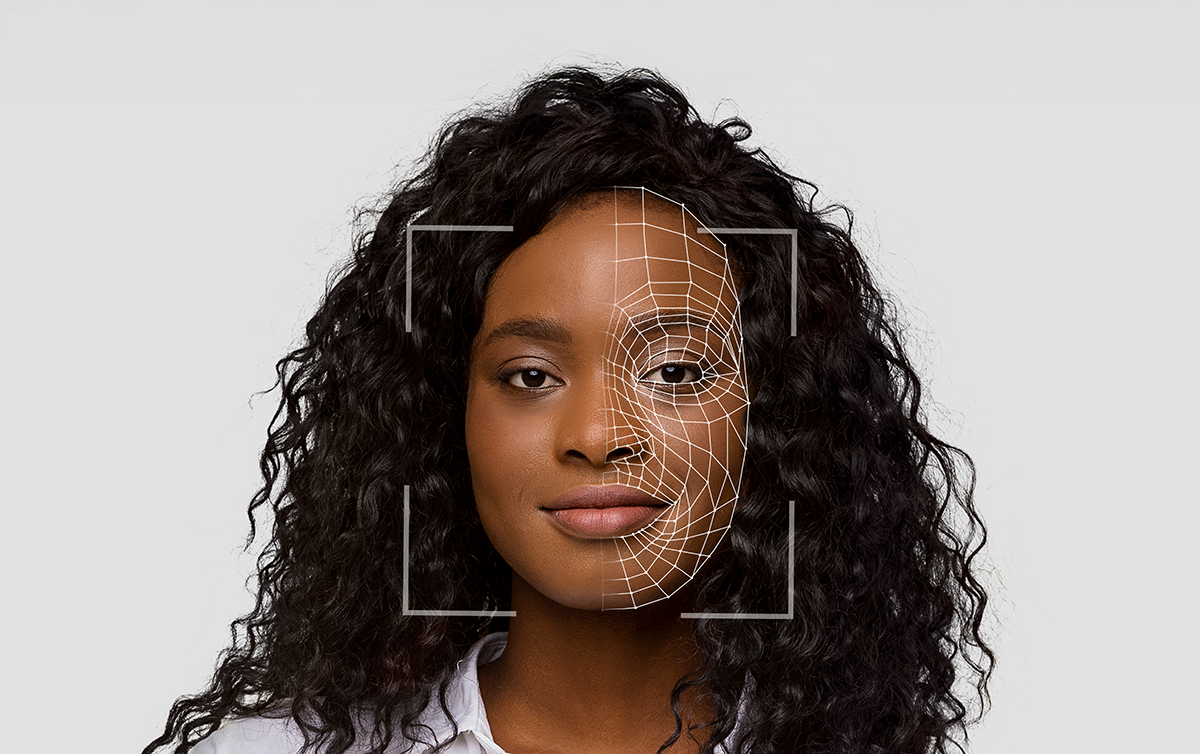
The fraud landscape in Africa has changed. What once required physical documents and careful coordination now happens at scale in server farms across the continent. Deepfakes, injection attacks, and emulator farms have industrialized identity fraud in ways that legacy verification systems were never designed to handle.
Western identity vendors built their models on Western faces, Western documents, and Western fraud patterns. When they arrived in Africa, they brought those assumptions with them. The result is predictable: 99.2% accuracy in London becomes 87% accuracy in Lagos. A system trained on German passports fails on Ghanaian national IDs. The gap isn't a minor calibration issue—it's a fundamental mismatch between the data the models learned from and the data they're asked to verify.
Smile ID's approach is different. Our models are trained on 400 million African verifications. We've seen every variation of every document across 30 African governments. We understand the specific vulnerabilities of African identity systems because we've built our intelligence layer on African data, not adapted Western models to fit African problems.
Deepfakes are the most visible threat. A skilled operator can now create a video of someone's face that passes basic liveness checks. But the real sophistication lies in the injection attacks—where fraudsters intercept the verification flow and inject a pre-recorded video or a synthetic image at the exact moment the system expects to see a live face. These attacks are invisible to systems that weren't trained to detect them.
Our models catch these attacks because they've learned to recognize the subtle artifacts of synthetic media. The micro-expressions that don't quite align. The lighting that's too perfect. The eye movements that follow a pattern rather than responding naturally to the environment. These aren't rules we programmed in—they're patterns our models learned from millions of real and fraudulent attempts.
The second wave of fraud is deduplication attacks. A single fraudster creates multiple synthetic identities, each one passing verification individually, but all controlled by the same person. Traditional systems see each identity as separate. Our deduplication engine sees the connections—the shared device fingerprints, the behavioral patterns, the network relationships that link seemingly unrelated accounts.
Emulator farms represent a different kind of threat. Fraudsters rent server space and run thousands of Android emulators, each one simulating a different device. They use these to create accounts, bypass rate limiting, and distribute fraud across a network that looks like legitimate users. Detecting this requires understanding how real devices behave in low-bandwidth, low-light conditions—the actual conditions across much of Africa. Systems built for high-end smartphones in developed markets don't know what to look for.
The compliance angle matters too. Regulators across Africa are tightening KYC requirements, but they're also becoming more sophisticated about what constitutes adequate verification. A system that catches 95% of fraud might be acceptable in one jurisdiction and insufficient in another. Smile ID's compliance layer is built on the actual regulatory requirements of 30+ African governments, not a generic interpretation of global standards.
What makes this moment critical is the acceleration. AI-driven fraud isn't a future threat—it's here now. The tools are accessible, the economics are favorable for fraudsters, and the damage is measurable. Banks are losing millions. Fintechs are seeing their fraud rates spike. Regulators are asking harder questions about how verification actually works.
The institutions that survive this transition are the ones that move now. They're the ones that recognize that a one-size-fits-all approach to identity verification doesn't work in Africa. They're the ones that invest in systems built on African data, trained by teams that understand African fraud, and designed for the actual conditions of African infrastructure.
Smile ID exists because this problem is too important to solve with borrowed solutions. We've built the largest proprietary dataset of African identity data. We've trained models that understand African documents, African faces, and African fraud patterns. We've achieved 99.8% accuracy where global vendors fail. And we've done it because the next billion users deserve identity verification that actually works for them.